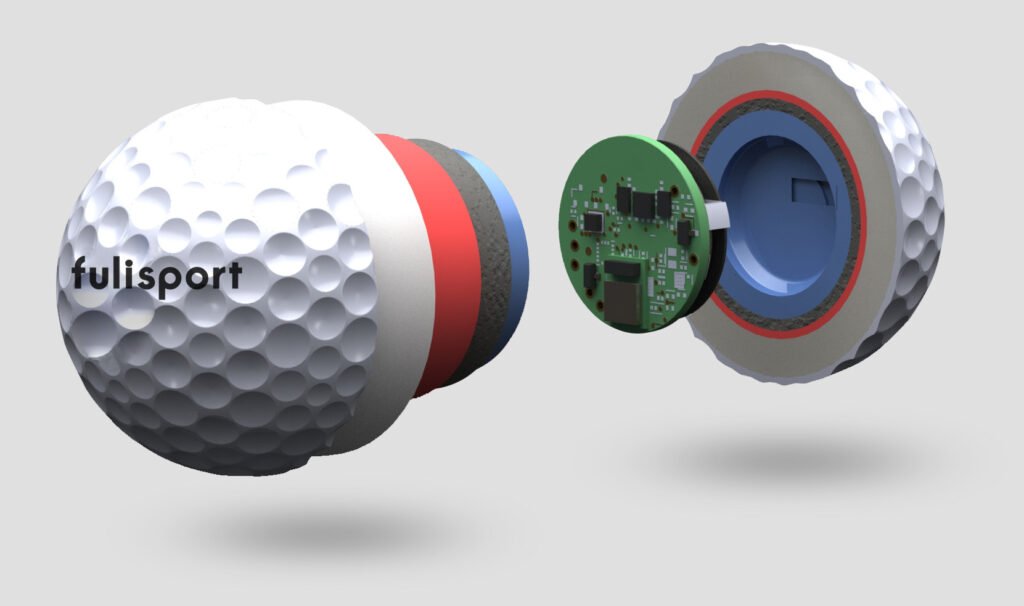
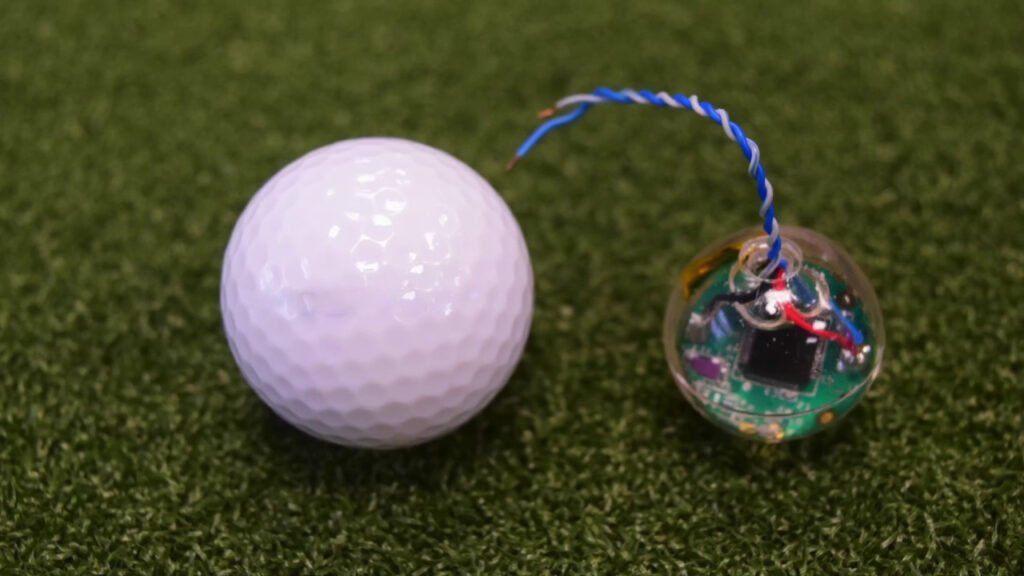
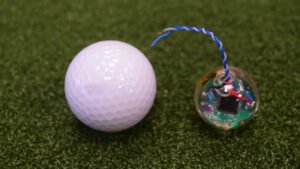
Our company is currently working on the research and development of innovative RFID golf balls, and if necessary, we invite customers to participate in relevant research and development projects.
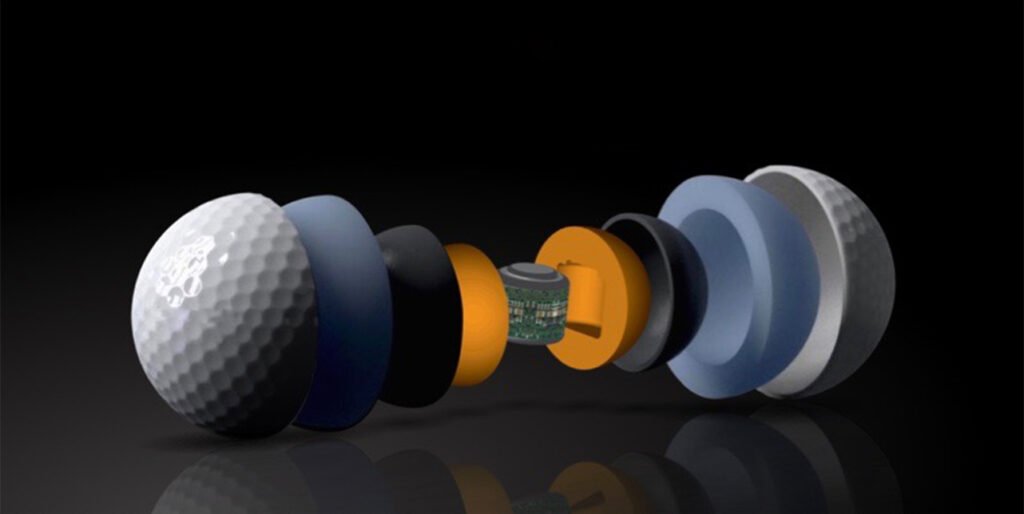
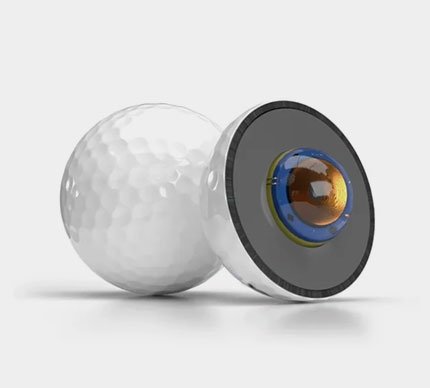
Each RFID golf ball has a microchip embedded inside that uploads real-time motion data, including the ball’s flying parabola, velocity, placement, and other key parameters.
When connected to a smartphone or other compatible device, users can easily access and utilize this information on the golf course, resulting in a smarter, more data-based experience for golf practice and competition.
Functional Principle of RFID Golf Balls
The chip’s built-in sensors continuously collect comprehensive motion data of the ball throughout its flight, including rotational speed, flight speed, trajectory, and more. For example, an acceleration sensor is able to detect changes in multidirectional acceleration to accurately calculate the velocity of movement of the ball.
At the same time, the sensor system also accurately measures the rotation angle and velocity of the ball, providing valuable data for analyzing the batting effect and swing action.
Once collected, these data points are wirelessly transmitted to external devices – including smartphones and professional golf analytics devices – for real-time data reading, visualization, and in-depth motion analysis.
Application Scenarios
Golf Training
In daily training, coaches and players can use data collected by RFID golf balls to evaluate batting performance.
By looking at parameters such as rotational speed and flight trajectory, the coach can determine whether the club face is in a vertical state when hitting the ball, whether the swing force is appropriate, and identify technical defects.
Players can then adjust their standing, swing path, and power output based on this information to steadily improve accuracy and distance control.
Golf Tournaments
In competitive events, RFID golf ball data can support professional event analysis and live broadcasting. Commentators can use real-time ball data to provide more detailed insights, such as predicting where the ball will fall and interpreting a player’s strategic decisions.
Event organizers can also use this data to uphold fair play principles, verify compliance with the rules of the game (such as whether the ball is rolling in a designated area) and ensure the fairness of the game.
Key R&D Focus Areas
While some high-end golf brands have introduced golf balls with built-in chips, RFID golf technology still faces technical bottlenecks. Our company focuses on breakthroughs in the following core areas:
Chip Integration And Miniaturization
The existing chips used by smart golf balls can perform basic data collection and transmission functions, but to meet higher performance requirements, more functions need to be integrated into smaller sizes.
Without sacrificing flight performance or appearance, we aim to add advanced detection capabilities, including surface pressure distribution and contact angle analysis between the club and the ball. This requires higher levels of chip integration and miniaturization.
In addition, the chip must be able to withstand extreme conditions in golf: high-speed impact, rapid rotation, and variable weather conditions. There is still room for improvement in the durability and stability of current products, which is a key goal of our R&D efforts.
Energy Supply And Endurance
RFID golf balls require a stable, continuous power supply to ensure reliable chip operation and data transmission.
Most current designs rely on battery power, but battery life is limited, making long-term use impractical. A typical golf tournament lasts for hours, and frequent battery changes or charging can disrupt the user experience.
Although wireless charging technology has been tested, the efficiency and convenience in golf scenarios are still not satisfactory.
We are developing more sustainable energy solutions, such as collecting kinetic energy from the ball’s flight and rolling motion, or using other ambient energy sources to extend working hours without the need for frequent charging.
Cost Control And Mass Production
The high technical threshold for RFID golf balls leads to higher production costs, which limits their market penetration. Reducing manufacturing costs and enabling mass production are critical to its widespread adoption.
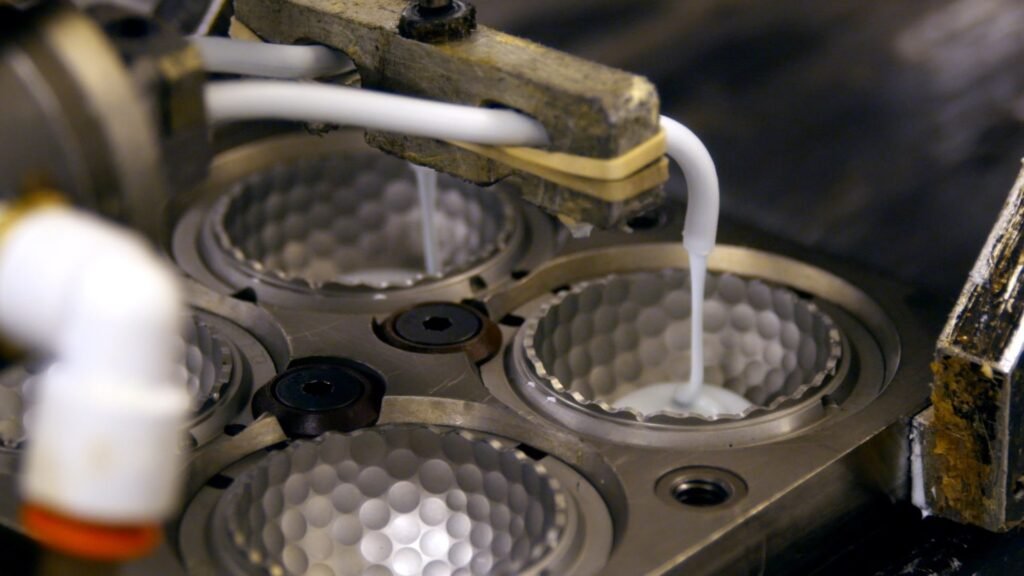
We are committed to optimizing chip manufacturing, packaging, testing, and overall golf ball production processes to increase efficiency and reduce materials and production costs – while always adhering to rigorous quality and performance standards.
Through continuous technological innovation, RFID golf will become more popular and widely used in the golf industry.
FAQS
How do I choose the right golf ball for my skill layer?
Beginners should start with two-layer balls for ease of use and affordability. Intermediate players might benefit from three-layer balls for better control.
Advanced players can explore four or five-layer options to enhance their performance.
Are more layers always better?
Not necessarily. While more layers can offer advanced performance features, they may not be suitable for every player.
Beginners might find multi-layer balls harder to control, while more experienced golfers can benefit from the added complexity.
What is Fuli lead time?
Usually, we ship orders in 2 weeks. But it will take a little longer if we have the heavy burden of production tasks. It also takes more time for customized products.
Can the weather affect the choice of golf ball?
Absolutely. In colder weather, a softer ball might provide better feel, while in warmer conditions, a firmer ball might maintain distance better.
Additionally, wet conditions may call for balls that offer better traction and control.
How often should I change my golf balls?
Golf balls should be replaced if they show visible signs of damage (scrapes, cuts) or if you notice a decline in performance.
Regular players may want to change balls every few rounds, while casual players can go longer.
Leave a Reply
Your email address will not be published. Required fields are marked *
Are you looking for
GOLF BALL?
Offers Suitable Golf For Wholesalers And Professionals