
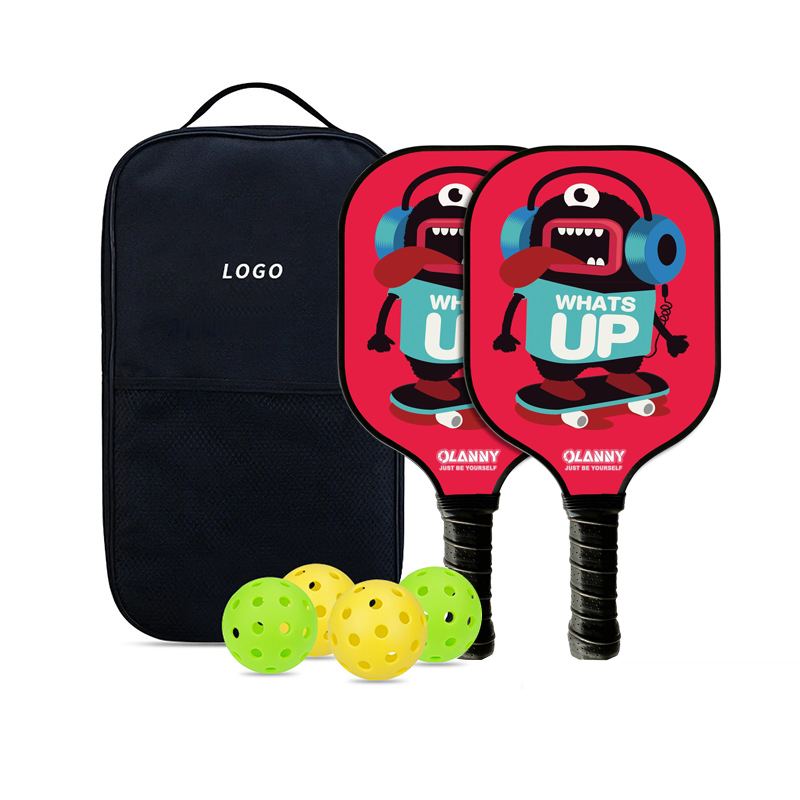
Description
Glass fiber pickleball paddle
Carbon fiber peak rackets offer several advantages over traditional rackets made from materials like wood or aluminum
- Lightweight: Carbon fiber is incredibly light, making peak rackets easier to maneuver and allowing players to swing faster and with less effort. This can lead to increased speed and power in shots.
- Strength and Durability: Despite being lightweight, carbon fiber is extremely strong and durable. Peak rackets are less prone to warping, bending, or breaking compared to rackets made from other materials, ensuring longevity even with heavy use.
- Stiffness: Carbon fiber provides excellent stiffness, which translates to more power and control in shots. The stiffness of the racket helps minimize energy loss during impact, allowing players to transfer more of their energy into the ball.
- Vibration Dampening: Carbon fiber rackets often come with built-in technologies or materials that absorb and dampen vibrations upon ball impact. This can reduce the risk of injury and minimize discomfort for players, especially during prolonged play sessions.
- Customization: Carbon fiber peak rackets often offer customizable features such as grip size, string tension, and head size. This allows players to tailor the racket to their specific playing style and preferences, ultimately improving their performance on the court.
- Consistency: Carbon fiber manufacturing processes allow for greater consistency in racket production compared to natural materials like wood. This means that each racket produced will have similar performance characteristics, providing players with a reliable and predictable playing experience.
- Improved Shock Absorption: Carbon fiber rackets can be engineered to absorb and disperse shock more effectively than other materials, reducing the strain on a player’s arm and minimizing the risk of injury, particularly over long matches or practice sessions.
Overall, carbon fiber peak rackets offer a winning combination of lightweight design, strength, stiffness, and customization options, making them a popular choice among tennis players looking to enhance their game
Pickleball paddles come in various shapes, sizes, and materials, each offering different characteristics and performance attributes.
Here are some of the main characteristics and performance factors to consider when choosing a pickleball paddle.
Material:
- Core Material: Pickleball paddles typically have a core made of materials like polymer, foam, or wood. The core material affects the paddle’s feel, power, and control.
- Face Material: The face of the paddle can be made of materials such as graphite, fiberglass, carbon fiber, or composite materials. Different face materials offer varying levels of power, control, and durability.
Grip Size:
- Grip size refers to the circumference of the handle. Pickleball paddles typically come in various grip sizes to accommodate different hand sizes and preferences. A comfortable grip size ensures better control and reduces the risk of wrist fatigue or injury.
Shape and Size:
- Pickleball paddles come in different shapes, including traditional, elongated, and widebody shapes. The size and shape of the paddle’s hitting surface impact the paddle’s sweet spot, power, and control.
Performance Characteristics:
- Power: The ability of the paddle to generate speed and force behind shots.
- Control: The paddle’s ability to place shots accurately and consistently.
- Spin: The paddle’s capability to put spin on the ball, affecting its trajectory and bounce.
- Touch/Feel: The tactile feedback and responsiveness of the paddle, particularly for soft shots and dinking.
- Durability: The longevity and resilience of the paddle against wear and tear from regular play.Glass fiber pickleball paddle
Grip Material:
- The grip material affects the paddle’s feel and comfort during play. Common grip materials include cushioned synthetic materials or perforated grips for moisture absorption and enhanced grip.
Balance:
- Paddle balance refers to the distribution of weight throughout the paddle. Paddles can be balanced in three ways: head-heavy, even balance, or handle-heavy. The balance affects the paddle’s maneuverability, power, and stability.
Noise Level:
- Some materials and paddle designs produce more noise upon ball contact than others. Noise-reducing technologies or materials may be incorporated into paddle designs to minimize noise during play, which can be especially important in noise-restricted areas.
Weight:
- Pickleball paddles can range in weight from around 6 to 14 ounces. Lighter paddles offer more maneuverability and control, while heavier paddles provide more power and stability. The ideal weight depends on the player’s preference and playing style.
Reviews
There are no reviews yet.